
LVGE VACUUM PUMP FILTER
“LVGE Solves Your Filtration Worries”
The OEM/ODM of filters
for 26 large vacuum pump manufacturers worldwide
⚡ The Problem & The Solution
Why Your Vacuum Pump Needs an Oil Mist Filter
Oil-sealed rotary vane vacuum pumps expel exhaust containing fine oil mist droplets and aerosols during operation. Without an effective vacuum pump oil mist filter, these emissions cause equipment damage, workplace hazards, and environmental violations.
🔍 Selection Guide
How to Choose a Vacuum Pump Oil Mist Filter: 8 Key Steps
Follow this systematic process to identify the ideal oil mist filter for your specific vacuum pump model and application requirements.
Identify Your Pump Model & Exhaust Port Size
Start with your vacuum pump's model number and manufacturer specifications. The exhaust port diameter (typically G1/4" to G2") determines the filter's inlet connection size. Always cross-reference the pump's exhaust flow rate (m³/h) to ensure compatibility.
Determine the Required Flow Rate Capacity
The oil mist filter must handle your pump's maximum exhaust volume without creating excessive back-pressure. Select a filter rated at least 20% above your pump's nominal displacement to allow for filter loading over time.
Assess the Operating Temperature Range
Vacuum pump exhaust temperatures can reach 60–120°C depending on pump type and duty cycle. Verify that the filter housing material (aluminum alloy vs. cast iron) and filter element media are rated for your operating temperature range.
Choose the Right Filter Media Grade
Oil mist filter elements are available in standard, fine, and ultra-fine grades. For most industrial vacuum pumps, a borosilicate glass fiber element with 0.3–1.0 micron rating achieves the best balance of filtration efficiency and service life.
Evaluate Oil Return & Drainage Design
A good vacuum pump oil mist separator features a coalescing design that collects separated oil and returns it to the pump sump via a drain port. Check that the drain valve is accessible and that the return line won't create a siphon effect.
Consider the Application Environment
Chemical vapor, moisture, and particulate contamination all affect filter selection. For corrosive environments, specify chemical-resistant filter media. For dusty conditions, consider a pre-filter stage to extend primary filter element life.
Check Differential Pressure Monitoring
Select a filter housing equipped with a differential pressure gauge or indicator. This allows maintenance teams to monitor filter loading in real-time and schedule element replacement before back-pressure impacts vacuum performance.
Verify Certifications & Compliance Standards
For regulated industries (pharmaceutical, food processing, semiconductor), ensure your vacuum pump exhaust filter meets applicable standards such as ISO 9001, CE marking, and relevant industry-specific certifications for emission control.
📊 Product Comparison
Vacuum Pump Oil Mist Filter Types: Which Is Right for You?
Understanding the differences between oil mist filter types helps you match the right product to your specific vacuum system requirements.
| Filter Type | Filtration Efficiency | Best Application | Oil Recovery | Service Interval | LVGE Available |
|---|---|---|---|---|---|
| Coalescing Oil Mist Filter | 99.9% @ 0.3µm | Rotary vane pumps, general industrial | ✔ Excellent | 2,000–4,000 hrs | ✔ Yes |
| Exhaust Filter / Muffler | 95–99% | Low-noise environments, labs | ✔ Good | 1,500–3,000 hrs | ✔ Yes |
| Intake / Inlet Filter | Particulate only | Dusty/contaminated environments | ✘ N/A | 500–1,000 hrs | ✔ Yes |
| Oil Return Filter | Fine oil filtration | Oil recirculation systems | ✔ High | 3,000–6,000 hrs | ✔ Yes |
| Combined Exhaust + Oil Mist | 99.9%+ | High-volume industrial pumps | ✔ Excellent | 2,000–5,000 hrs | ✔ Yes |
🎯 Technical Criteria
Critical Vacuum Pump Oil Mist Filter Selection Parameters
These technical parameters directly determine whether your chosen oil mist eliminator will perform reliably in your specific application.
⚡ Flow Rate & Pump Displacement
Match filter capacity to pump displacement (m³/h). A filter that is undersized creates back-pressure that reduces vacuum performance and overloads the filter element, shortening its service life dramatically.
🌡️ Temperature & Pressure Rating
Exhaust gas temperature and operating pressure must be within the filter's rated specifications. High-temperature applications require metal-bodied filters with high-temperature seals — standard plastic housings will deform or fail.
🔬 Filtration Efficiency (Micron Rating)
Oil mist particle sizes typically range from 0.01 to 10 microns. For effective emission control, select a filter element rated to capture particles ≥ 0.3 microns at ≥ 99% efficiency using the MPPS test standard.
🔩 Connection Size & Mounting Orientation
Verify that the filter inlet thread (BSP, NPT, or flanged) matches your pump's exhaust port. Mounting orientation affects oil drainage — vertical mounting with drain at the bottom is optimal for coalescing filters.
Essential Checklist for Oil Mist Filter Selection
- Confirm exhaust port thread size and type (BSP/NPT)
- Calculate required flow rate with 20% safety margin
- Check maximum exhaust temperature at full load
- Specify micron rating based on emission requirements
- Confirm oil return drain port location and size
- Verify housing material compatibility with pump oil type
- Check differential pressure indicator availability
- Confirm element replacement availability and lead time
- Review certifications required for your industry
- Consider noise attenuation if pump is in occupied space
- Assess chemical compatibility for process vapors
- Verify OEM cross-reference for direct replacement fit
🏭 Industry Applications
Where Vacuum Pump Oil Mist Filters Are Essential
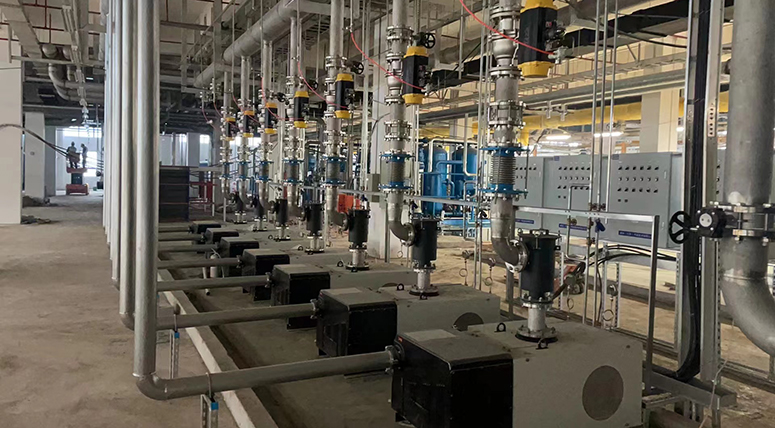
Oil mist filtration is critical across a wide range of industrial and scientific sectors. Choosing the right vacuum pump exhaust filter for your industry ensures compliance, efficiency, and equipment longevity.
🏢 About LVGE Filters
Your Trusted Vacuum Pump Filter Manufacturer Since 2012
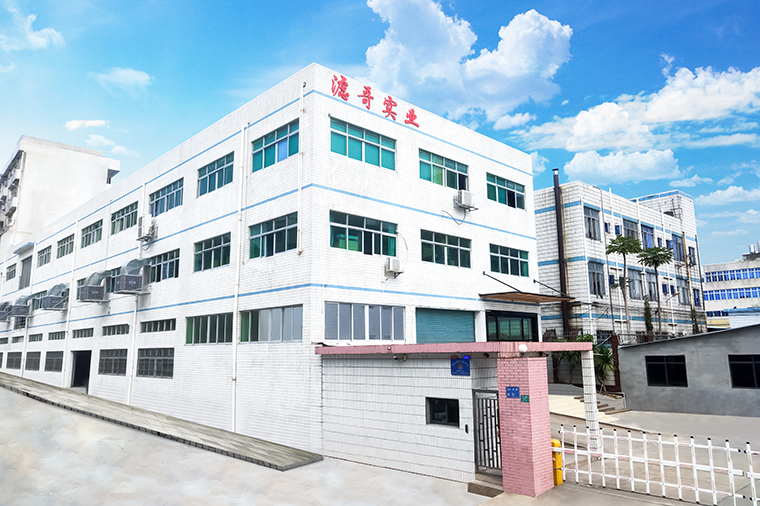
Dongguan LVGE Industrial Co., Ltd. was founded by three senior filter technical engineers in 2012. A proud member of the China Vacuum Society and a nationally recognized high-tech enterprise, LVGE specializes in the research, development, production, and sales of vacuum pump filters — including intake filters, exhaust filters, and oil filters.
Our R&D team includes more than 10 key engineers with over 10 years of experience, including 2 specialists with over 20 years of expertise in fluid filtration technology. A dedicated team of young engineers works alongside our veterans, jointly advancing industrial fluid filtration research.
LVGE's philosophy — "One Kilometer Deep Despite One Centimeter Wide" — reflects our decade-long commitment to mastering vacuum pump filtration. We have accumulated deep expertise in dust filtration, gas-liquid separation, oil mist filtration, and oil recovery, helping thousands of enterprises solve equipment filtration and industrial emission challenges.
🚀 Why Choose LVGE
Enterprise Advantages That Set Our Oil Mist Filters Apart
LVGE has always regarded "Safety, Environmental Protection, Energy Conservation, and High Efficiency" as the soul of every product we manufacture.
27-Stage Quality Testing
Every filter undergoes 27 rigorous tests from raw material inspection to finished product verification, excluding additional service life tests during new product development.
40+ Production Equipment Sets
Our facility operates over 40 sets of specialized production and testing equipment, enabling a daily output capacity of up to 10,000 filter units.
Deep R&D Expertise
Our engineering team brings together decades of hands-on experience in vacuum pump filtration, gas-liquid separation, dust filtration, and oil mist recovery technology.
Global OEM/ODM Partner
As of 2022, LVGE serves as the OEM/ODM filter supplier for 26 major vacuum pump manufacturers worldwide, including partnerships with 3 Fortune 500 companies.
🔧 Maintenance Guide
Vacuum Pump Oil Mist Filter Maintenance & Replacement Best Practices
Proper maintenance is as important as correct initial selection. Follow these guidelines to maximize filter performance and protect your vacuum system investment.
❓ Frequently Asked Questions
Vacuum Pump Oil Mist Filter: Common Questions Answered
Get clear answers to the most common questions about selecting, installing, and maintaining vacuum pump oil mist filters.
🏆 Trusted Globally
Why Industry Leaders Choose LVGE Vacuum Pump Filters
Ready to Find the Perfect Vacuum Pump Oil Mist Filter?
Tell us your pump model, flow rate, and application — our engineers will recommend the ideal oil mist filter solution within 24 hours.


