

For long-term users of rotary piston (rotary vane) vacuum pumps, exhaust filters are undoubtedly familiar. Although not an integral part of the pump itself, an exhaust filter is essential for ensuring the pump's emissions meet environmental standards. Furthermore, it is indispensable for recovering pump oil and reducing operating costs. Here, we provide key knowledge for selecting the right exhaust filter.

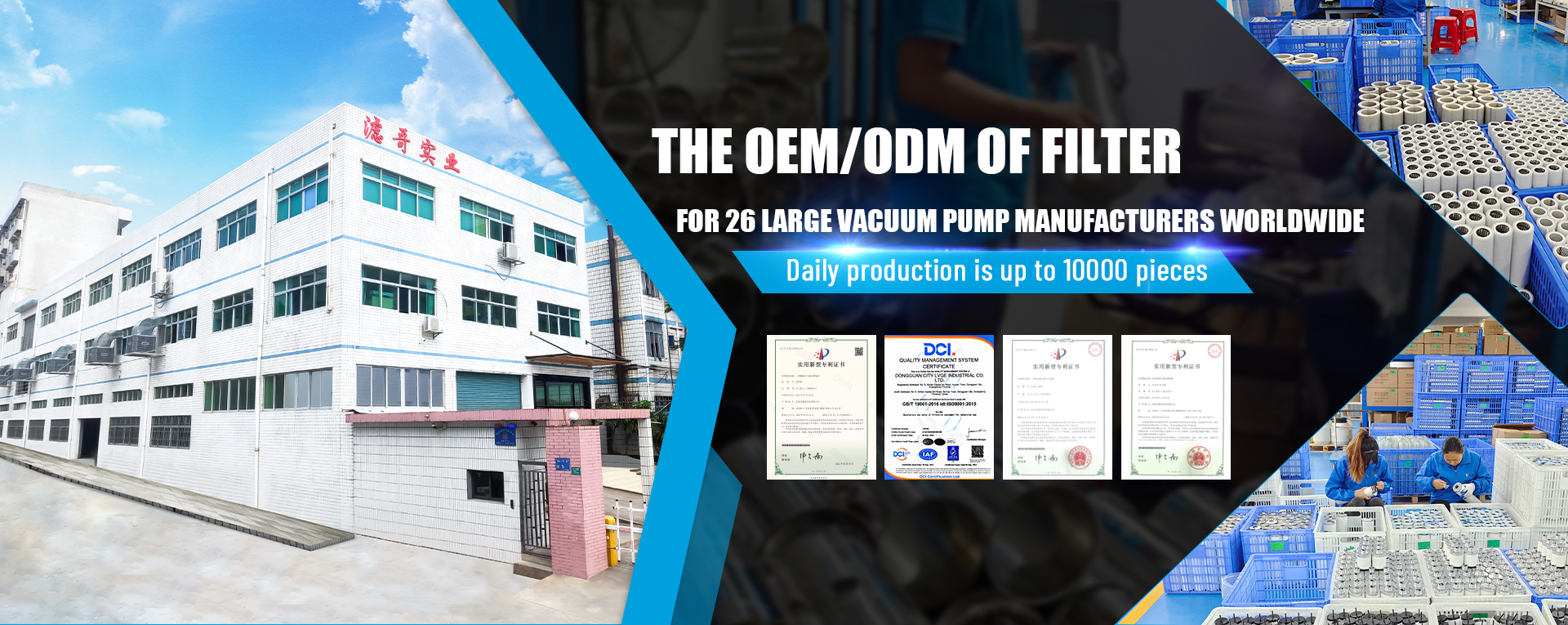
1. Prioritize Reliable Manufacturers with Standardized Production Processes
The quality of a filter is fundamentally determined by the standardization and consistency of its manufacturing. Many products on the market come from manufacturers lacking standardized processes, which can lead to issues such as:
- Dimensional inaccuracies, causing difficult installation or poor fit.
- Sealing defects, leading to leaks, oil mist bypass, and filter failure.
- Structural flaws, like uneven internal airflow or short-circuiting channels, severely impacting filtration efficiency.
Therefore, priority should be given to reputable brands or specialized manufacturers with robust quality management systems, standardized production, and reliable technical support. Products from such sources typically offer higher consistency and dependable performance parameters.
2. Focus on Key Operational Performance Indicators
Selection should not rely solely on specifications; practical performance under operating conditions is crucial. Focus on these two primary aspects:
① Monitor Operating Back Pressure
During operation, a pressure differential (back pressure) develops between the filter's inlet and outlet. Generally, a lower back pressure indicates better filter quality, signifying less resistance to airflow and superior internal design. Excessively high back pressure increases the exhaust load on the vacuum pump, potentially leading to higher operating temperatures, increased energy consumption, and even reduced pumping speed and vacuum level. A well-designed filter should maintain low and stable back pressure while ensuring high filtration efficiency.
②Measure Residual Oil Content in Exhaust
This is the most direct indicator of an exhaust filter's efficiency. A high-quality filter can reduce the oil mist concentration in the exhaust gas to a very low level (e.g., <5 mg/m³). Preliminary assessment can be done using professional detection equipment or by observing a clean white paper placed at the exhaust outlet over time. A high oil content post-filtration suggests:
- Low separation efficiency of the filter media.
- Possible "oil carryover," where liquid droplets are not effectively captured and are expelled with the gas.
- This leads to abnormal pump oil consumption, increased costs, and potential workplace contamination.
3. Evaluate Overall Benefits and Long-Term Costs
Selecting an exhaust filter should involve a total cost of ownership perspective:
- High Filtration Efficiency: Ensures compliance with environmental regulations, avoiding legal risks.
- High Pump Oil Recovery Rate: Directly reduces the frequency of new oil purchases and top-ups, offering significant economic benefits.
- Long Service Life and Low Maintenance: High-quality filter elements offer greater dirt-holding capacity and longer replacement intervals. The design should also facilitate easy maintenance and replacement, lowering long-term operational costs.

Conclusion and Recommendation:
Choosing an exhaust filter for a rotary piston pump should not be driven by price alone. First, select a professional supplier with a solid reputation and standardized production capabilities. Then, focus on evaluating core performance data such as operating back pressure and actual exhaust oil concentration to ensure the filter efficiently separates oil mist without imposing an additional burden on the pump's normal operation. Ultimately, selecting a reliable, high-performance, and well-matched exhaust filter will contribute to the clean, efficient, and economical operation of your rotary piston vacuum pump system.
Post time: Feb-05-2026


