

During the mixing and processing of glue, air can easily become trapped within the liquid, forming tiny bubbles. If these bubbles are not removed, they can directly affect the adhesive strength, optical clarity, and overall quality of the final product. Therefore, glue deaeration has become a critical step in chemical production. Vacuum deaeration is a widely used and efficient method. Its principle involves reducing the ambient pressure, causing bubbles to expand rapidly and rise to the liquid surface where they burst, thereby achieving fast bubble removal.

In this process, the vacuum pump plays an indispensable role. It is responsible for continuously extracting air from the sealed container, creating and maintaining a low-pressure environment that provides the necessary conditions for bubble expansion and removal. However, during high-speed mixing or under vacuum, glue often releases fine particulates or volatile substances resembling oil mist. If these contaminants are drawn directly into the vacuum pump along with the airflow, they can cause a range of damage: they may contaminate the pump oil (in oil-sealed pumps), corrode metal components, block internal passages, and accelerate wear on rotors and vanes. Ultimately, this affects the pump's pumping efficiency and service life.
Therefore, in glue deaeration processes, a vacuum pump alone is insufficient; it must be equipped with a suitable vacuum pump inlet filter. The core function of the filter is to effectively capture and separate glue oil mist, tiny droplets, and other impurities carried in the gas stream before it enters the vacuum pump. As a result, the gas entering the pump chamber is relatively clean, protecting internal components from contamination and wear, and ensuring more stable and reliable equipment operation.
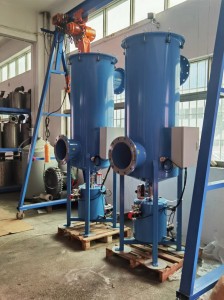
When selecting the appropriate filter, decisions should be based on the characteristics of the glue and the specific operating conditions. If the glue contains significant volatile components or tends to generate oil mist, a high-efficiency viscous gel separator is recommended. This type of filter can effectively capture and coalesce fine liquid mist particles, preventing them from penetrating the filter layer and entering the pump. Additionally, the filter material should be considered for corrosion resistance to handle potentially chemically aggressive volatiles from the glue.
In summary, in the glue deaeration process, the vacuum pump and the filter are inseparable partners. The vacuum pump creates the low-pressure environment needed for deaeration, while the filter protects the "health" of the vacuum pump. Only through their coordinated action can the deaeration process be efficient and stable, while extending equipment life and reducing maintenance costs. Correctly selecting and regularly maintaining the filter are important safeguards for enterprises to achieve continuous production and improve product quality.
Post time: Apr-08-2026


