

Operating Time and Pump Type Determine Replacement Frequency
The oil mist filter is a critical component of oil-sealed vacuum pumps. Its primary function is to separate oil mist from the exhaust gas, ensuring clean air discharge and compliance with environmental regulations. Over time, oil droplets and fine particles accumulate on the filter media, gradually increasing exhaust back pressure. If not addressed in time, this can negatively affect pump performance, energy consumption, and even service life. For this reason, understanding when to replace the oil mist filter is essential for stable vacuum system operation.
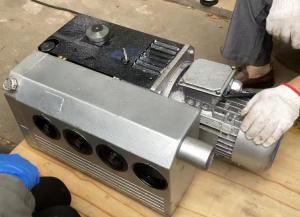
There is no fixed replacement interval that applies to all vacuum pumps. One of the most important factors is operating time. Vacuum pumps running continuously or under long-duty cycles generate oil mist continuously, causing the filter element to load faster. In contrast, pumps operating intermittently usually experience slower contamination buildup, allowing for a longer replacement cycle. Pump type and filter size also play a role. Larger oil mist filters typically offer a greater filtration area, which helps distribute contamination more evenly and extend service life compared to smaller filters under the same operating conditions.
In practice, manufacturers often provide general guidelines, but these should be considered reference values rather than strict rules. Actual replacement frequency should always be adjusted based on real operating data and system behavior.
Working Conditions Play a Critical Role in Filter Lifespan
In addition to operating time, the working environment has a significant impact on how quickly an oil mist filter becomes saturated. If the vacuum pump operates in a clean environment with proper inlet filtration, the oil mist filter will mainly handle oil aerosols from the exhaust, resulting in a relatively predictable service life. However, in many industrial applications, the situation is far more complex.
Processes that generate dust, fine particles, or chemical vapors can indirectly shorten the lifespan of the oil mist filter. If inlet filtration is insufficient, contaminants may enter the pump and mix with the lubricating oil. These impurities are then carried into the exhaust stream and trapped by the oil mist filter, accelerating blockage. High humidity or water vapor in the process gas can also affect oil quality, increasing emulsion formation and further reducing filtration efficiency.
Therefore, when oil mist filters clog much faster than expected, the root cause is often not the filter itself but the overall system conditions. Improving inlet filtration, optimizing process parameters, or selecting a filter design better suited to harsh environments can significantly extend replacement intervals and reduce operating costs.
Using Differential Pressure to Decide When to Replace
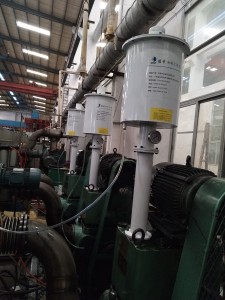
Because operating conditions vary widely, the most reliable way to determine when to replace an oil mist filter is by monitoring differential pressure. Many oil mist filters can be equipped with a pressure gauge or differential pressure indicator that shows the pressure drop across the filter element. As contamination accumulates, exhaust resistance increases, and the pressure reading rises accordingly.
Most manufacturers specify a recommended maximum differential pressure. When this value is reached, it indicates that the filter element is approaching saturation and should be cleaned or replaced. Continuing to operate beyond this point can lead to reduced pumping efficiency, increased oil carryover, higher energy consumption, and potential damage to seals or internal components due to excessive back pressure.
Regular inspection combined with pressure monitoring allows maintenance teams to make data-driven decisions instead of relying on fixed schedules. This approach not only protects the vacuum pump but also optimizes filter usage, ensuring replacements are performed at the right time—neither too early nor too late.

Post time: Jan-26-2026


