

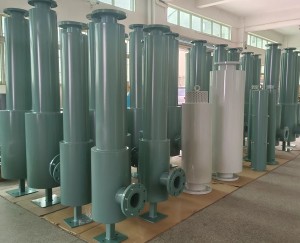
Dry vacuum pumps often generate significant exhaust noise during operation. To reduce this noise and improve the working environment, many users choose to install a silencer at the exhaust port. A silencer typically reduces noise by altering the gas flow path through its internal structure or by absorbing sound energy with acoustic materials. However, some users have noticed that after installing a silencer, the pumping performance of the vacuum pump seems to decline, with a perceived drop in pumping speed. What causes this? Let’s analyze the reasons step by step.
After a silencer is installed, the exhaust gas must pass through its internal channels before being discharged. Silencers often contain porous materials, expansion chambers, or other reactive silencing structures. While these designs are effective at reducing noise, they also create some resistance to the gas flow, causing the pressure at the exhaust side to rise. This is known as "backpressure." An increase in backpressure means greater exhaust resistance, requiring the vacuum pump to overcome a higher pressure to expel the gas, which in turn affects pumping efficiency.

The impact of increased backpressure on a vacuum pump is mainly reflected in two aspects:
- Reduced pumping speed: Poor exhaust flow slows down the rate at which gas is expelled from the pump chamber, thereby affecting the overall pumping rate.
- Lower ultimate vacuum: Greater exhaust resistance leads to more residual gas remaining inside the pump, raising the minimum achievable pressure.
Both of these changes can make users feel that the pumping speed has decreased.
Therefore, the compatibility between the silencer and the vacuum pump is crucial. If the silencer’s diameter is too small or its internal flow path is too narrow, exhaust resistance will increase significantly. Conversely, if the silencer is properly sized to match the pump’s displacement, the impact on pumping capacity will be minimal. When selecting a silencer, it is important to choose a model that matches the pump’s exhaust volume and port size.
In addition, other factors during operation can also affect exhaust performance. For example, the accumulation of oil sludge or dust inside the silencer can block the gas flow path, further increasing exhaust resistance. Regular inspection and cleaning of the silencer are recommended to maintain proper operation and avoid unnecessary impacts on vacuum pump performance.
Post time: May-22-2026


