

Selecting a reliable vacuum pump filter manufacturer in China is critical for businesses seeking to maintain optimal vacuum system performance while ensuring cost-efficiency and operational reliability. With the growing demand for industrial, pharmaceutical, and research applications, understanding the landscape of Chinese manufacturers and evaluating their capabilities is essential for engineers, procurement managers, and OEM partners.
This guide provides a deep dive into the types of vacuum pump filters, key performance considerations, and a stage-based framework to help you identify the most suitable manufacturers in China. It also includes statistical insights to guide decision-making.
Introduction to Vacuum Pump Filters
Vacuum pumps are used in diverse industrial sectors, and the filtration system within the pump ensures that contaminants do not compromise performance. Choosing the right filter is as critical as selecting the pump itself.
Why High-Quality Filters Are Critical
High-quality filters provide:
● Protection of internal pump components from dust and debris
● Stable vacuum levels across operational cycles
● Extended pump lifespan and reduced maintenance costs
Low-quality or incompatible filters can lead to efficiency loss, increased energy consumption, and premature wear.
Overview of Vacuum Pump Applications
Common applications that rely on reliable filtration include:
● Electronics manufacturing for semiconductors and displays
● Pharmaceutical production requiring contamination-free environments
● Food packaging for vacuum sealing and preservation
● Laboratory and research applications requiring precise vacuum control
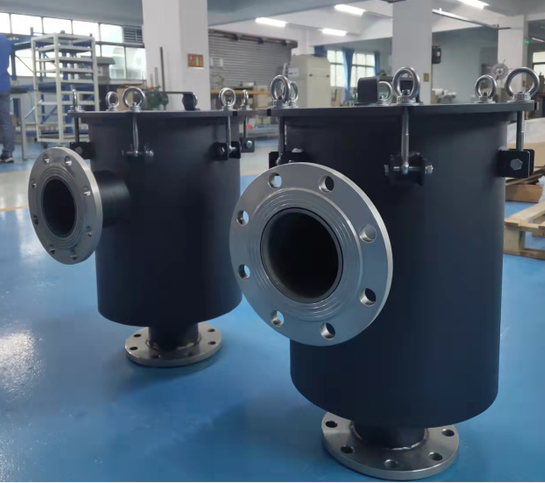
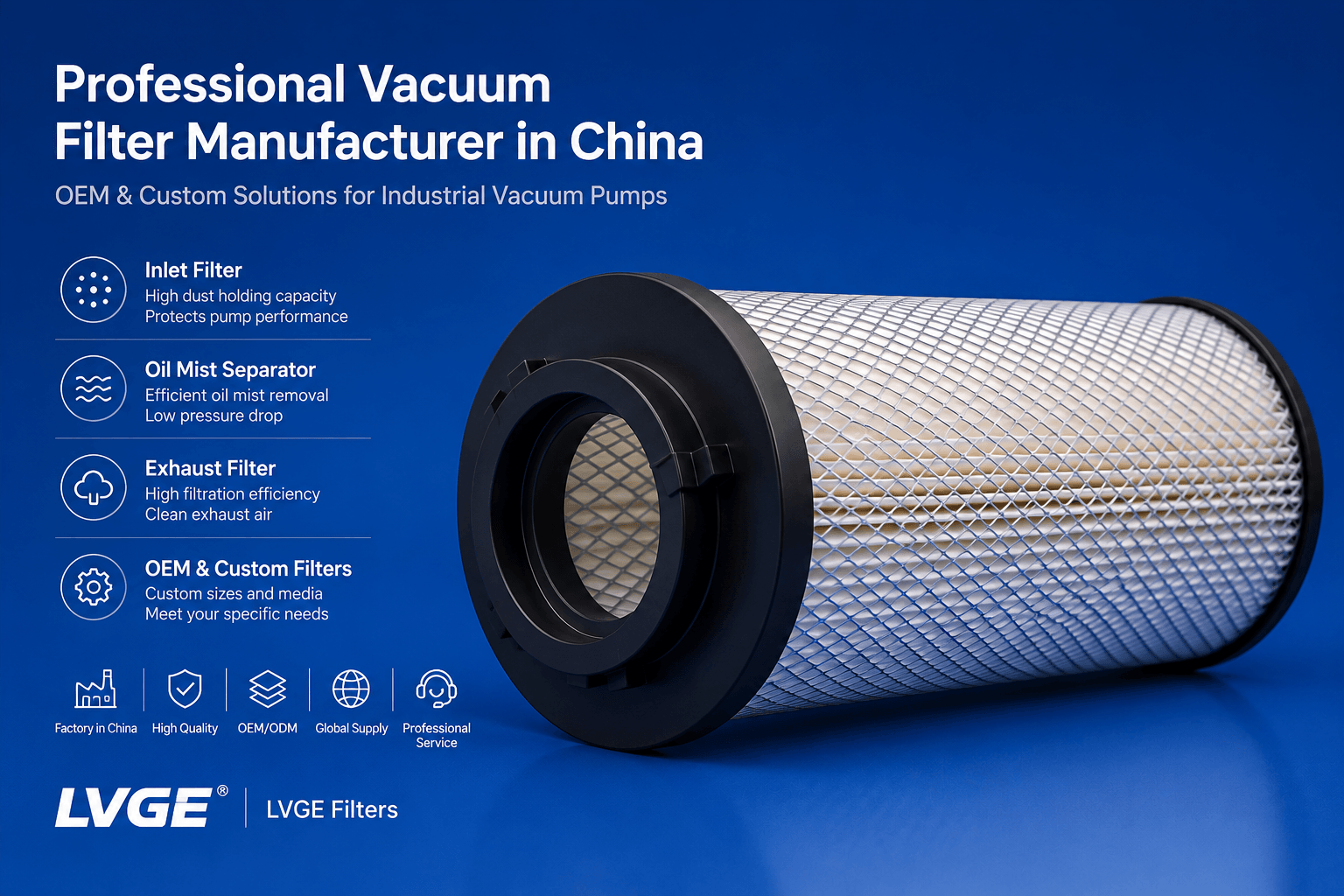
Types of Vacuum Pump Filters Manufactured in China
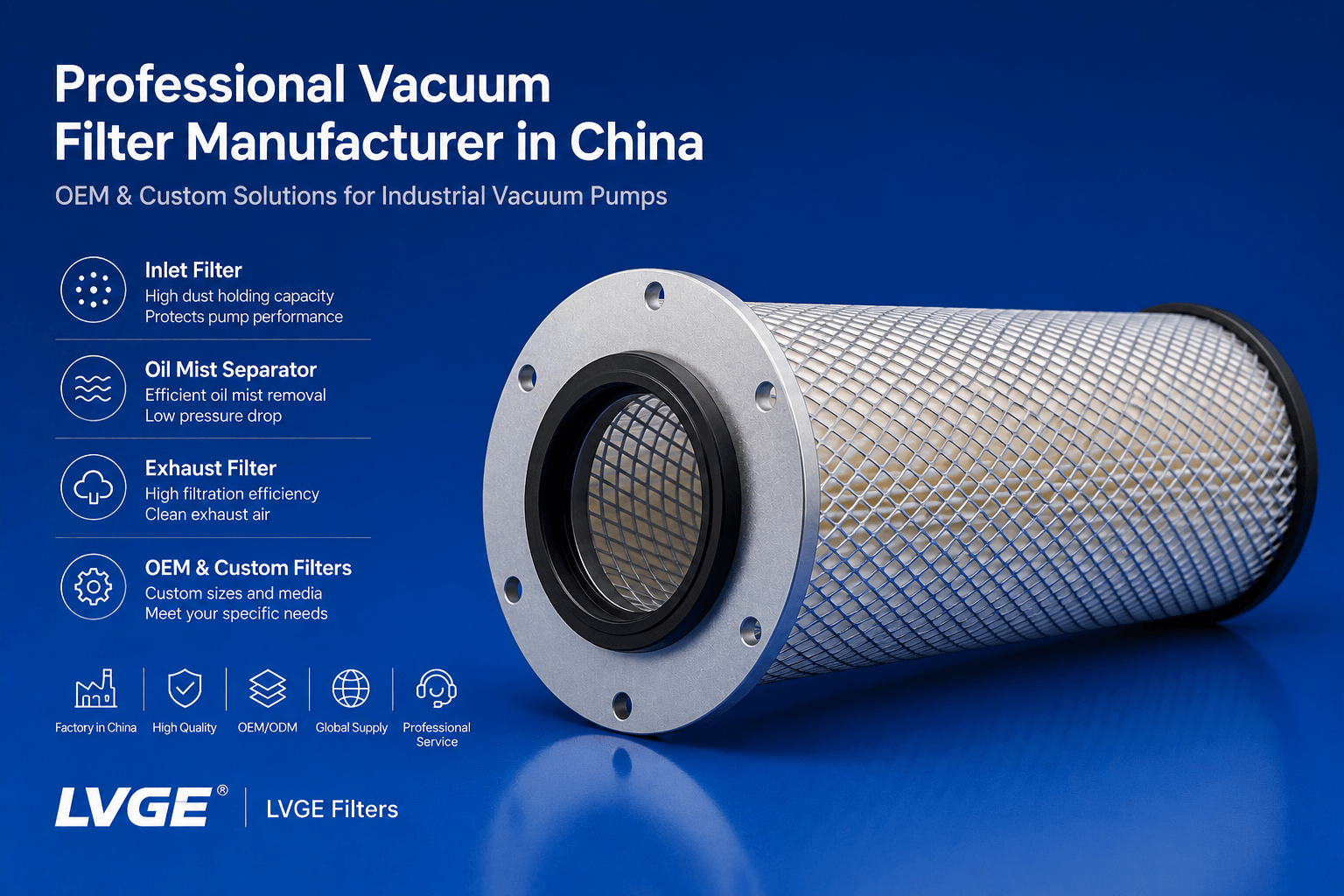
Chinese manufacturers provide a wide range of replacement filters compatible with Leybold, Busch, and other industrial vacuum pumps.
Inlet Filters
Inlet filters prevent dust, particles, and environmental contaminants from entering the pump. They are particularly essential in dusty or particle-laden environments, such as woodworking or chemical processing facilities.
Oil Mist Separators
Oil-sealed vacuum pumps produce oil mist during operation. Separators help:
● Capture oil aerosols efficiently
● Reduce emissions and maintain clean working environments
● Recover oil for reuse, lowering operational costs
Exhaust Filters
Exhaust filters ensure clean air is released into the environment and prevent oil and particulate matter from contaminating surrounding areas. These filters also help manufacturers comply with environmental regulations.
Key Performance Factors When Evaluating Manufacturers
Selecting a manufacturer requires assessing multiple performance criteria.
Filtration Efficiency and Material Quality
A variety of filter media and fineness levels are available to choose from, with corresponding filtration efficiencies ranging from 95% to 99%.
High filtration efficiency is maintained while minimizing any impact on vacuum pump operation.
Durability and Environmental Resistance
Quality filters should withstand:
● High operating temperatures
● Humidity and chemical exposure
● Continuous operation without structural degradation
Customization Capabilities
Manufacturers offering custom dimensions, materials, or OEM specifications provide added value for unique industrial applications.
Delivery Reliability and After-Sales Support
A manufacturer’s capacity for timely delivery, technical support, and consistent quality is crucial for uninterrupted operations.
Stage-Based Guide to Selecting the Right Manufacturer
Applying a structured stage-based selection process simplifies decision-making and ensures all critical factors are considered.
Stage 1 – Identify Required Filter Specifications
Confirm the vacuum pump model, operating conditions, and filter type needed. Verify manufacturer compatibility with these specifications.
Stage 2 – Assess Manufacturing Capabilities
Evaluate whether the manufacturer has:
● ISO-certified facilities
● Advanced filtration technology
● Experience with OEM and bulk production orders
Stage 3 – Evaluate Quality Standards and Certifications
Check for relevant certifications, such as:
● ISO 9001 Quality Management
● CE compliance
● Industry-specific standards (pharmaceutical, electronics)
Stage 4 – Compare Lead Times and Cost
Compare multiple suppliers on:
● Unit cost and bulk pricing
● Delivery schedules
● Supply chain reliability
Stage 5 – Confirm Technical Support and After-Sales Service
Ensure the manufacturer offers:
● Clear technical documentation
● Maintenance guidance
● Replacement or warranty support
Industry Applications and Case Examples
Electronics Manufacturing
High-precision vacuum pumps are critical for semiconductor fabrication and display assembly, requiring dust-free and contamination-free filtration.
Pharmaceutical Production
Vacuum systems in pharmaceutical production demand reliable filtration to maintain regulatory compliance and product safety.
Food Packaging
Effective vacuum filtration reduces oil contamination, protects pump integrity, and ensures consistent packaging quality.
Laboratory Research
Accurate vacuum levels are essential in research and testing environments; filters help maintain system stability and prevent downtime.
Statistical Insights – Key Factors in Manufacturer Selection
|
Selection Factor |
Importance (%) |
|
Filtration Efficiency |
30 |
|
Service Life |
25 |
|
Compatibility |
20 |
|
Delivery Reliability |
15 |
|
Cost Efficiency |
10 |
These statistics emphasize the priority of long-term performance, reliability, and compatibility over short-term cost savings.
Conclusion
Selecting the best vacuum pump filter manufacturer in China involves understanding filter types, key performance parameters, and the operational environment. By applying the stage-based selection framework, industrial operators can identify manufacturers that deliver consistent quality, efficient filtration, and reliable support. A strategic approach reduces downtime, improves pump performance, and enhances overall operational efficiency.
FAQ
How do I identify the right vacuum pump filter manufacturer in China?
Verify pump compatibility, production capabilities, and certifications to ensure the supplier meets quality and operational standards.
What certifications should I look for?
ISO 9001, CE compliance, and industry-specific standards indicate a manufacturer’s reliability and adherence to quality practices.
Can Chinese manufacturers customize filters for specific applications?
Yes, many manufacturers offer OEM solutions, including custom dimensions, materials, and performance specifications.
How frequently should replacement filters be changed?
Replacement intervals vary with operating conditions, environmental contaminants, and filter grade. Routine inspections are recommended.
Which industries benefit most from high-quality vacuum pump filters?
Electronics manufacturing, pharmaceuticals, food packaging, and laboratory research rely heavily on effective filtration for operational reliability.
Post time: Jun-12-2026


