

Importance of Vacuum Degassing in Plastic Extrusion Processing Lines
In modern plastic extrusion production lines, vacuum degassing is a critical process that directly affects product quality, material stability, and overall production efficiency. During the heating and melting stage, polymer materials are transformed into a viscous molten state. However, even high-quality raw materials inevitably contain trapped air, moisture, and low-molecular-weight volatile compounds. These unwanted substances are released during melting but can easily remain trapped within the melt if not properly removed.
If these gases are not efficiently extracted, they will be retained in the final extrudate and lead to a range of quality defects. Common issues include bubble formation, silver streaks, surface voids, flow marks, and inconsistent mechanical properties. In high-precision applications such as packaging films, engineering plastics, and coated products, even minor gas-related defects can significantly reduce product performance and market value.
To solve these problems, vacuum degassing systems are installed at the venting section of the extruder. By applying a controlled vacuum environment, the system creates a negative pressure zone that continuously draws out gases released from the molten polymer. This allows the melt to become more uniform, stable, and free of entrapped volatiles before entering downstream forming, cooling, and pelletizing stages. As a result, vacuum degassing is widely recognized as an essential step for ensuring high-quality extrusion output.

Operational Challenges Faced by Vacuum Pumps in Extrusion Degassing Systems
Although vacuum pumps are the core equipment responsible for maintaining stable negative pressure, the operating environment in extrusion degassing systems is highly demanding. The gas extracted from the extruder is not clean process air; instead, it is a complex mixture that typically contains water vapor, oil mist, and fine polymer particles or resin residues carried from the molten material.
These contaminants present serious operational challenges for vacuum pumps. Once they enter the pump chamber, they can gradually accumulate on internal components such as rotors, vanes, seals, and oil systems. Over time, this contamination leads to reduced pumping efficiency, unstable vacuum levels, and increased energy consumption. The pump may also experience overheating due to increased internal resistance.
In more severe cases, long-term exposure to contaminated gas can cause rotor imbalance, corrosion of internal parts, oil degradation, and even mechanical seizure. When pump failure occurs, production must be stopped, resulting in significant downtime losses and maintenance costs. This risk becomes even more pronounced in extrusion processes involving recycled materials, high-moisture polymers, or formulations containing fillers and additives, as these conditions typically generate higher levels of contaminants.
Therefore, while vacuum pumps are indispensable for degassing performance, they must be properly protected to ensure long-term stable operation under harsh industrial conditions.
-夹套-冷凝-食品行业-225x300.jpg)
Function, Working Principle, and Benefits of Vacuum Pump Filters in Extrusion Applications
To address these challenges, a vacuum pump filter or gas-liquid separator is typically installed between the extrusion vent port and the vacuum pump inlet. Its main function is to pre-treat the extracted gas stream before it enters the pump, ensuring that only relatively clean gas reaches the vacuum system.
The filtration system works through a combination of physical separation mechanisms. First, larger liquid droplets and heavy particles are removed through gravity settling and directional flow changes inside the separator chamber. Then, finer oil mist and micro-droplets are captured by coalescing filter elements or high-efficiency filter media. Finally, the cleaned gas is discharged into the vacuum pump for continuous operation.
This multi-stage separation process significantly reduces the contamination load on the vacuum pump. As a result, internal wear is minimized and system stability is greatly improved. The benefits of using a vacuum pump filter are both operational and economic.
From a performance perspective, it helps maintain stable vacuum levels, improves system responsiveness, and ensures consistent degassing efficiency. From a maintenance perspective, it extends the service life of the vacuum pump, reduces the frequency of oil changes and repairs, and lowers overall maintenance costs. From a production perspective, it reduces unexpected downtime and helps ensure continuous, reliable extrusion operation.
In addition, a properly designed filtration system can adapt to different extrusion conditions, including high-temperature melts, high-viscosity materials, and processes with heavy contamination loads. Although it is often considered an auxiliary component in the system layout, the vacuum pump filter plays a crucial protective role. It ensures that the vacuum pump operates under cleaner conditions, thereby safeguarding the entire vacuum degassing process and supporting stable, efficient, and high-quality plastic extrusion production over the long term.
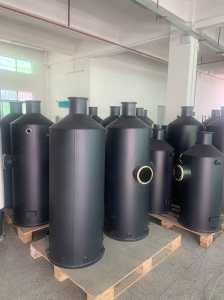
If you are looking for reliable vacuum pump filters or gas-liquid separation solutions for plastic extrusion degassing systems, please feel free to contact us. Our team is ready to provide technical support, product selection advice, and customized solutions based on your specific application needs.
Post time: May-26-2026


